Where our products are made, and why
Back to Journal
We believe it is better to be clear about how things are made, even when the answer is not simple.
Right now, our products are made in Asia.
We know this can raise questions for some people, especially when outdoor brands talk about responsibility and sustainability. Those questions are fair, and they deserve a direct answer.
Why production happens there
Much of the world’s technical outdoor manufacturing is based in Asia.
The specialist fabrics, recycled yarns, and skilled construction needed for durable outdoor gear are already established there. The factories we work with have the knowledge, equipment, and scale required to make products that last.
Producing closer to home is something many brands talk about, but location alone does not guarantee better environmental impact, fairer working conditions, or higher quality. What matters more is how something is made, not just where.
Our focus is to work with factories that meet recognised environmental and social standards, while still allowing us to create long-lasting products at a fair price.
Production planning and transport
We operate on two main production cycles per year. This helps us plan more carefully and avoid constant small-batch manufacturing and repeat freight movements.
Where possible, we consolidate goods and move larger shipments at once rather than multiple smaller ones. Most international transport is carried by sea or land freight, which has a significantly lower carbon intensity than air freight.
We avoid air freight unless there is a genuine operational need. Slower transport requires better forecasting and discipline, but it reduces unnecessary emissions.
Producing in fewer, planned cycles also helps reduce overproduction. We aim to make closer to what is actually needed, rather than chasing constant replenishment.
The standards behind the products
We only choose partners that are independently certified and regularly audited.
Depending on the product, this can include:
- GRS (Global Recycled Standard) factories, which verify recycled materials and traceability.
- ISO 14001, showing structured environmental management.
- ISO 50001, focused on monitoring and improving energy use.
- SA8000, covering worker rights, safety, and fair conditions.
- BSCI membership, supporting ongoing social compliance monitoring.
These certifications are not a perfect solution, but they provide a meaningful baseline and accountability beyond our own claims.
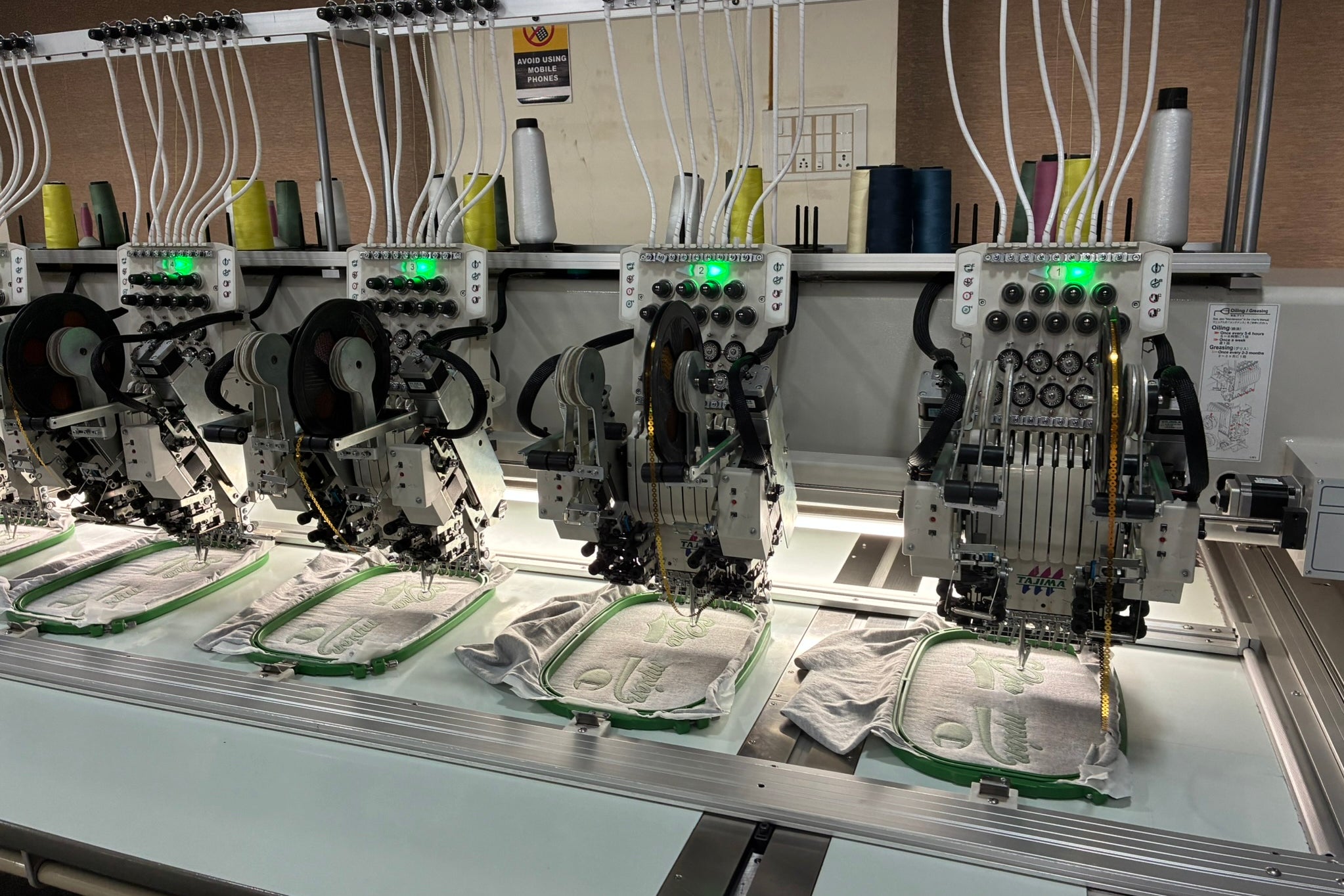
Materials and small reductions
We aim to use recycled materials wherever they are suitable for the product and its long-term durability.
For example, we often use recycled polyester to reduce reliance on fossil-fuel-based raw materials, while giving existing resources a longer life.
We also try to remove unnecessary waste where possible. Many of our products are delivered without cardboard swing tags to avoid contributing to deforestation. Small decisions like this do not solve everything, but they reduce impact in quiet ways.
Being honest about the limits
- Responsible production is not a finished state.
- Distance still has an environmental cost.
- Certifications are only a starting point.
- There is always more to improve.
We do not see sustainability as a label to apply, but as a series of ongoing decisions. Some are visible, many are not.
What matters most to us
The most important thing we can do is make products that are used for a long time.
Durability, repairability, and everyday usefulness reduce waste more than short-lived “sustainable” alternatives.
Our aim is simple:
- Make fewer things.
- Make them responsibly.
- Make them last.
We will keep sharing how this work evolves, openly and without claims of perfection.
Comments (0)
More articles

